1 mm or 2 mm? Choosing Lead Rolls for X-Ray Room Shielding
Most shielding decisions come down to a single question: which material can be verified, certified, and still installed on site with ordinary tools by an ordinary crew? For an X-ray room, the answer has been lead for a century, and it is still lead, because lead rolls for X-ray room shielding carry three advantages composites struggle to match — density, dimensional predictability, and workability in the hands of an everyday fitter. At 11.34 g/cm³, two millimetres of lead do roughly what twenty millimetres of concrete do, which is why a thin barrier can sit inside a corridor wall without triggering a structural review. Density without consistency, though, buys nothing, and consistency is exactly what decides whether a radiation shielding lead roll clears its first survey or needs a second visit.
The most valuable advantage never appears on a quotation: uniformity across the whole coil. A lead thickness for X-ray room design assumes identical attenuation at the tenth square metre and at the first, and a roll held to ±0.1 mm delivers precisely that — no guessing, no sampling, no hoping. Scrap-fed material behaves the opposite way: slag, dross and intermetallic inclusions survive rolling as voids, and voids produce low readings exactly where the barrier is meant to be strongest. Buyers who purchase on price per kilogram usually settle that difference through repainting, re-inspection and a protection officer who no longer trusts the file. In a hospital programme, it is the one cost that never returns to the original schedule.
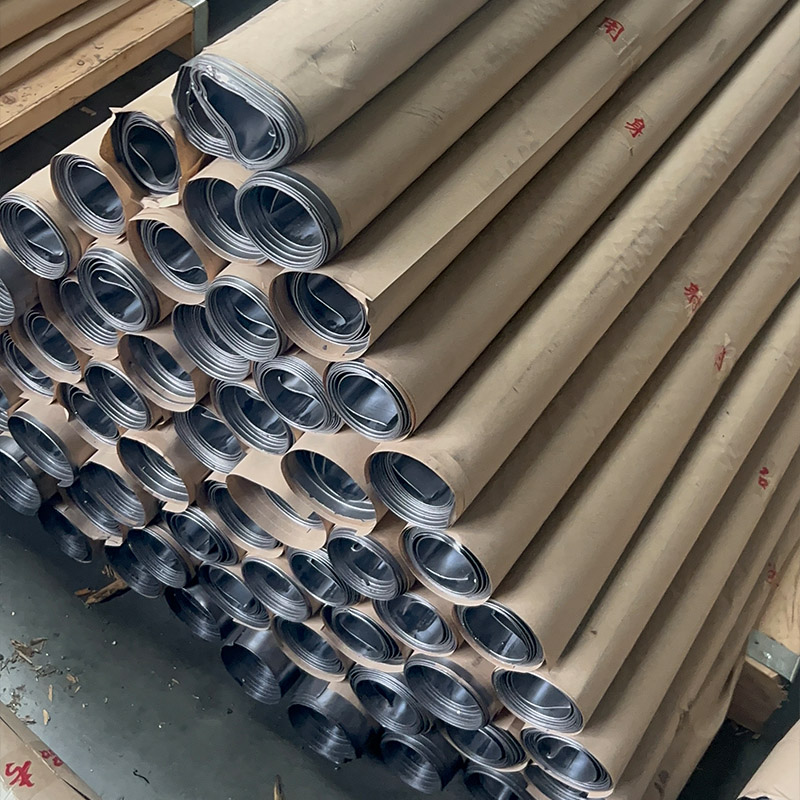
The 1 mm versus 2 mm argument, at the purchasing desk, is really an argument about range, which is why more buyers now order from the rolling plant instead of a stockist. Lead rolls for X-ray room is not a single product: a dental surgery wants thin sheet, a general radiographic room normally runs at 2 mm, and an interventional suite needs a designed assembly. A mill that can roll 0.5 mm through 20 mm from one certified chemistry lets a hospital put every room into one submittal, and lets a contractor on a phased programme use one approved material from the first room to the last. Geometry adds to it: 1000 mm and 1200 mm widths remove roughly a third of the joints on a typical wall, and each joint removed saves sealant, fasteners and inspection time that never reach the invoice.
Temper is the specification that tends to be overlooked, yet it decides whether installation goes smoothly. Half-hard material forms cleanly around columns and duct runs; soft temper lies flat and dresses onto uneven substrates. A supplier able to offer both tempers from one melt saves the project a mid-course change of source and a second approval cycle. Cut-to-size delivery takes the waste out of the order directly: when a lead rolls for X-ray room coil arrives at the room's real dimensions, offcuts drop from double-digit percentages to near zero, and freight volume falls with them.
On site, the quality of lead rolls for X-ray room shows up first at the sheet edge. Only a true, straight edge allows the 20–30 mm overlap that closes a seam without relying on mastic; a wavy edge forces the fitter to chase the cut line, wastes metal, and leaves the gap a survey meter locates in seconds. Soft temper matters just as much in retrofit work. Door frames, cable trays, penetrations and uneven substrates all require material formed in place rather than re-ordered — dressed around a corner by hand, bent over a duct, cut with a knife or shear without cracking at the grain boundary.
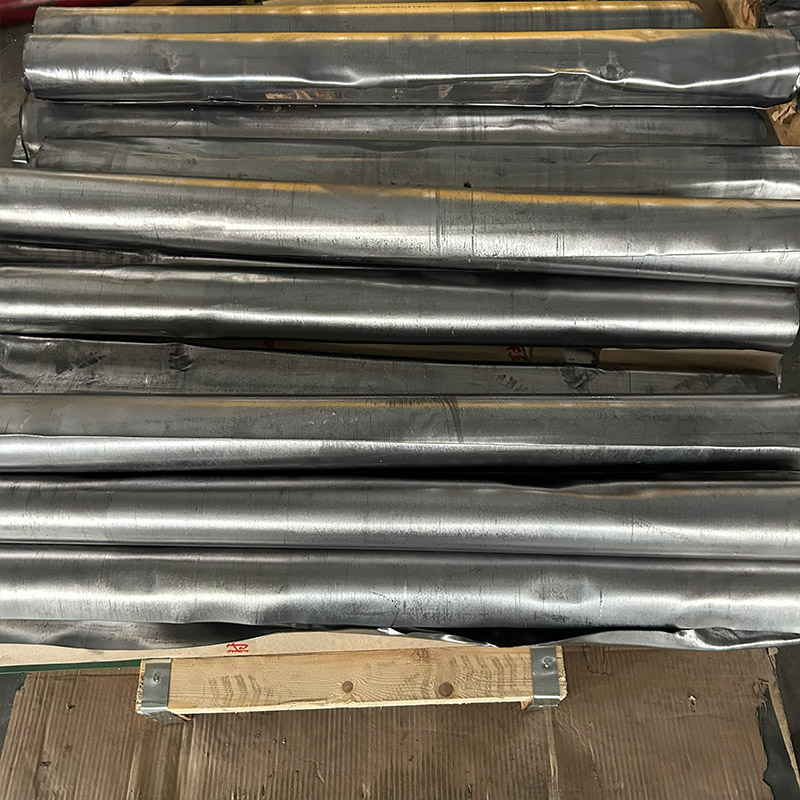
The real cost to lead line an X-ray room is settled here too, not by the price per kilogram. A wall finished in half a day instead of two, one less call-back, one less re-survey and one less return shipment — together these outweigh the price gap between a cheap coil and a correct one. Contractors who track their own numbers find that lead shielding for X-ray room material belongs to the small group of items where paying a little more for tolerance and width lowers the total cost.
A correctly fixed lead rolls for X-ray room barrier does not shrink, crack or lose density, and its attenuation is effectively unchanged after decades — the reason lead still sets the benchmark that newer composites are measured against, while organic barriers age, embrittle and eventually need replacing. The only genuine threats sit at the surface: humidity, acidic condensate and galvanic contact with dissimilar metals, all of which are answered by factory finish, dry storage and correct fixing.
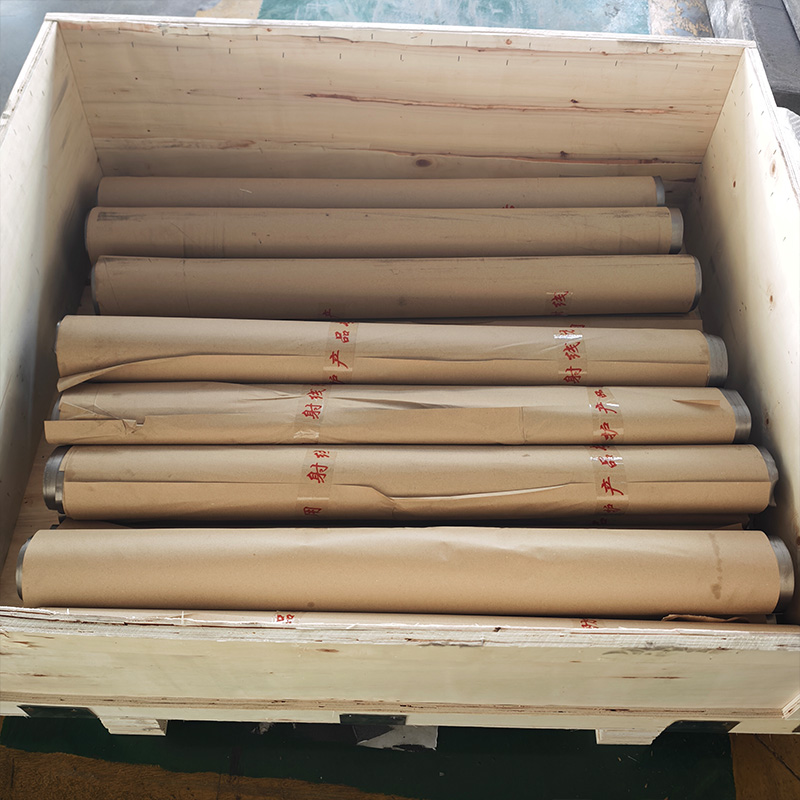
Shandong Qite Protective Equipment manufactures lead rolls for X-ray room shielding and the full range around it — lead plate, lead doors, lead glass and lead wool — supplying medical, industrial and laboratory buyers across Europe, the Middle East, Southeast Asia and Latin America. Rolling from 0.5 mm to 20 mm on one certified chemistry means the 1 mm dental specification and the 2 mm hospital default come off the same plant and the same temperature-controlled process, cut to the room's real dimensions before packing rather than after arrival. As a lead roll supplier working to overseas tender schedules, the plant packs for the load rather than the pallet: seaworthy crates, moisture barrier, edge protection and coil cradles, with HS code, weight list and certificate of origin ready before the container is booked. And as a lead roll supplier that also cuts in-house, it prices at source-factory level rather than trader margin, so the radiation shielding lead roll a physicist specified is the roll that arrives on site — flat, certified, correctly tempered and ready to fix.