99.99% Pure Lead Sheet Roll: Rolled to Spec, Cut to Your Room
From material purity to delivered dimensions — the critical work hides inside a lead roll nobody sees
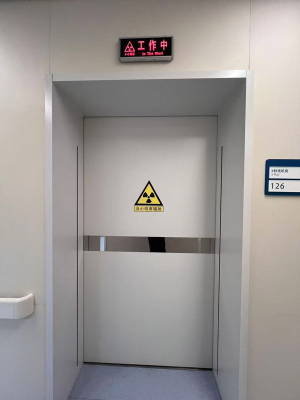
In a shielding catalogue a lead sheet roll looks unremarkable, yet it carries most of the basic work. Pure lead is cast and rolled into a continuous coil, delivered to site, cut to size and fixed to walls, ceilings, floors, the backs of door frames and machine-room linings. Once the job is finished, the lead sheet roll normally disappears behind plasterboard or under screed, but the protection inside a hospital X-ray room depends entirely on that invisible layer.
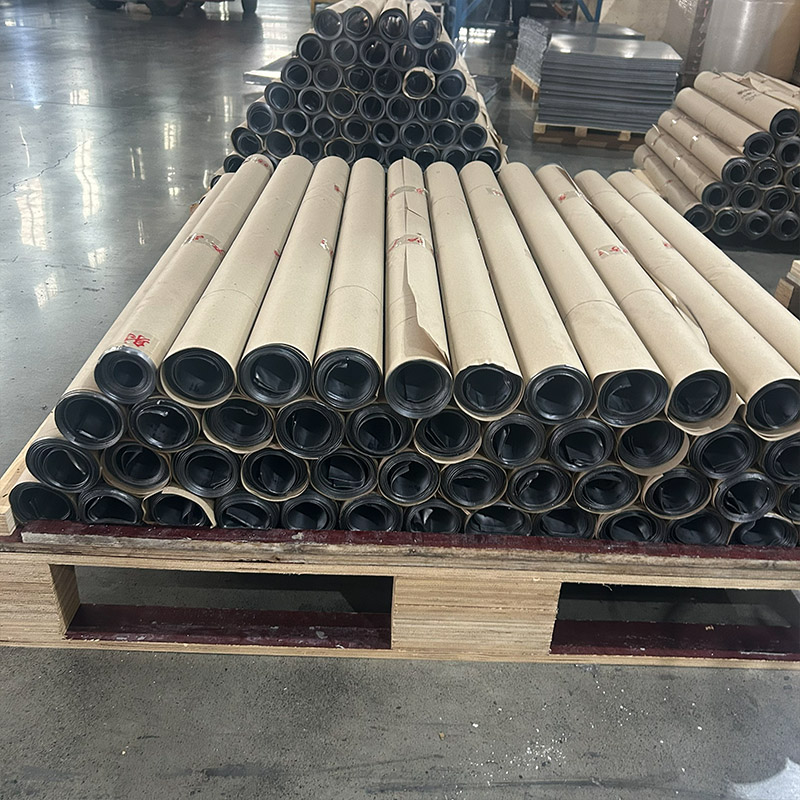
By specification, thickness usually runs from 0.5 mm to 20 mm, with hospital work clustered between 1 mm and 4 mm. Widths of 1000 mm and 1200 mm are the working standards, and coil weight ranges from 50 kg for a small clinic to 500 kg or more for crane-served floors. What separates one lead sheet roll from another is rarely the shape of the product. It is the purity of the lead, the evenness of the rolling, and whether the delivered size matches the drawing. Buyers who judge a radiation shielding lead roll on appearance alone are reading the least informative part of it.
Purity comes first: why 99.99% pure lead matters
Pure lead 99.99% is where shielding begins, and its importance is still underestimated by some buyers. Lead recovered from scrap can carry slag, dross and grit in the melt, and those inclusions are flattened into voids as the metal passes through the rolls. A radiation shielding lead roll with voids is not uniformly weak; it is weak in patches, and test equipment reads the weakest patch rather than the average. Material rolled from refined pure lead 99.99% has far less in it capable of forming a void, so the shielding value printed on the certificate has a better chance of matching what the finished lead sheet roll actually does across its whole length.
Why lead: density and workability
Three properties explain why shielding work uses lead rather than concrete, steel or polymer composites.
The first is atomic structure. Lead has an atomic number of 82, a heavy nucleus and a dense electron cloud, with a density of 11.34 g/cm³. An X-ray photon entering the material is far more likely to interact with those electrons and be absorbed than to pass between atoms. In common engineering estimates, 2 mm of radiation shielding lead roll performs roughly like 20 to 25 mm of concrete. That ratio is what lets a thin sheet sit inside a corridor wall that was never designed for extra load, while concrete of similar performance would add several hundred kilograms per square metre and call for a structural review. It is also why shielding thickness is quoted in millimetres of lead equivalence: the figure describes what the barrier actually stops, and plate made from pure lead 99.99% is commonly used as the reference against which other barriers are judged.
The second is workability. Soft and half-hard lead rolls for X-ray room applications can be wrapped around columns, dressed over ductwork, cut with a knife or heavy shears and joined by simple overlap without special tooling. That is what makes retrofit work practical rather than theoretical.
The third is stability. Under normal service conditions lead does not shrink, crack, absorb water or measurably lose density, it does not burn, and its shielding performance is effectively unchanged after decades. Many barrier materials need maintenance or replacement; a lead barrier usually serves in place for the life of the building.
Inside a finished building there are more everyday advantages. A lead sheet roll is thin enough that fitting it does not alter room dimensions, and once installed it can be checked with a thickness gauge, which means the shielding can be verified instead of assumed. When a room is altered later, the material can be cut and re-lapped rather than re-ordered. And at the end of the building's life, pure lead 99.99% still has recovery value — something most composites cannot offer. In a real project, that combination is why a radiation shielding lead roll often outlasts the equipment it was installed to protect.
Process discipline: thin gauges expose every deviation
A factory's value shows in the process discipline behind the product. Rolling pure lead 99.99% to ±0.1 mm across a 1200 mm width is not the same class of task as rolling scrap alloy to a nominal gauge. Thin material exposes every lapse: at 1 mm, a deviation that would be invisible inside 6 mm plate becomes a measurable loss of shielding margin. A dependable lead roll supplier controls the melt rather than the order book, holds thickness per coil rather than per batch, and can state the scope of its certification before being asked. Delivering that consistently is what turns a lead sheet roll from a commodity into a specified component.
From coil to cut size: dimensions often decide project efficiency
Shielding work is never one generic wall; it is a set of specific rooms, which is why dimensions so often decide how efficiently a project runs. A cut-to-size lead roll delivered against the drawing reduces the metal left on the floor at the end of the job, and it reduces a second cost that is rarely counted — the hours a crew spends measuring, marking and cutting instead of installing. Cutting length and width per room, supplying pre-formed strips for door frames and penetrations where needed, and matching coil weight to the way it will actually be moved on site all help the installation run faster. On lead rolls for X-ray room projects, a lead sheet roll that arrives at the right size is usually worth more than a cheaper one that arrives at the wrong size.
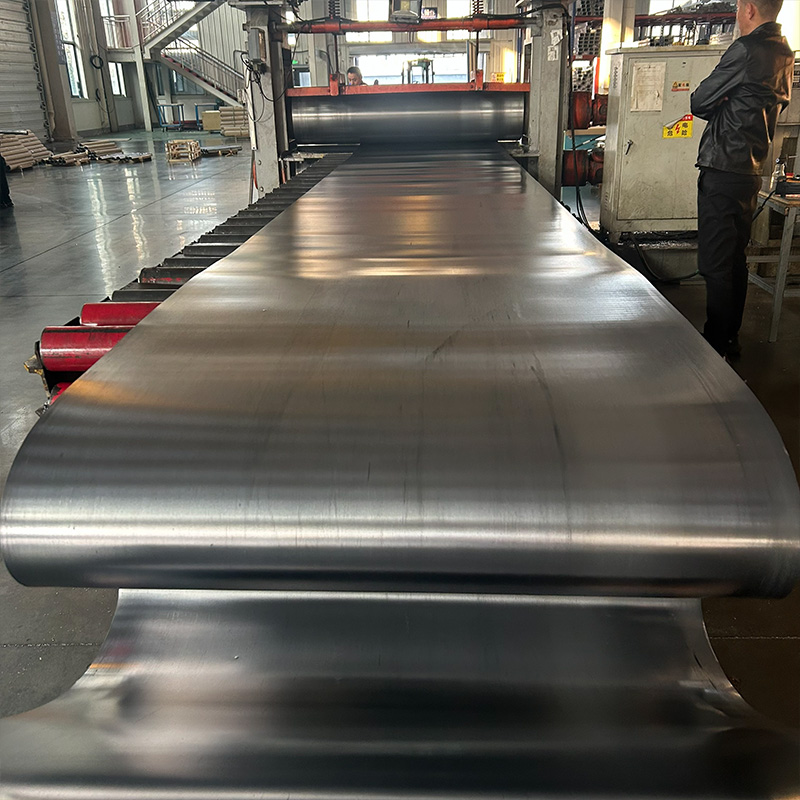
Shandong Qite Protective Equipment focuses on radiation protection materials and related products, including lead plate, lead sheet roll, lead doors and lead glass, for hospital X-ray rooms, CT suites, radiotherapy bunkers and industrial inspection applications. The company supports customisation against project drawings and site conditions: thickness from 0.5 mm to 20 mm, dimensions made to order, and length and width cut to the room. Products are packed in seaworthy wooden crates with moisture barrier, edge protection and coil cradles where required, and HS code, weight list and certificate of origin can be prepared before booking. As a lead roll supplier serving overseas projects, the plant ships worldwide so international schedules can proceed as planned, and the pure lead 99.99% named on the certificate is the material inside the cut-to-size lead roll that arrives on site.