Lead-lined Door Specifications for Dental Clinics
Lead-lined Door Specifications for Dental Clinics
When designing or renovating a dental clinic, patient and staff safety is paramount. Radiation shielding is a crucial component of ensuring safety, and lead-lined doors for X-ray rooms are a key element. They are more than just doors; they are a primary barrier designed to block scattered radiation. Choosing the wrong specifications can lead to non-compliance, safety hazards, and costly renovations.
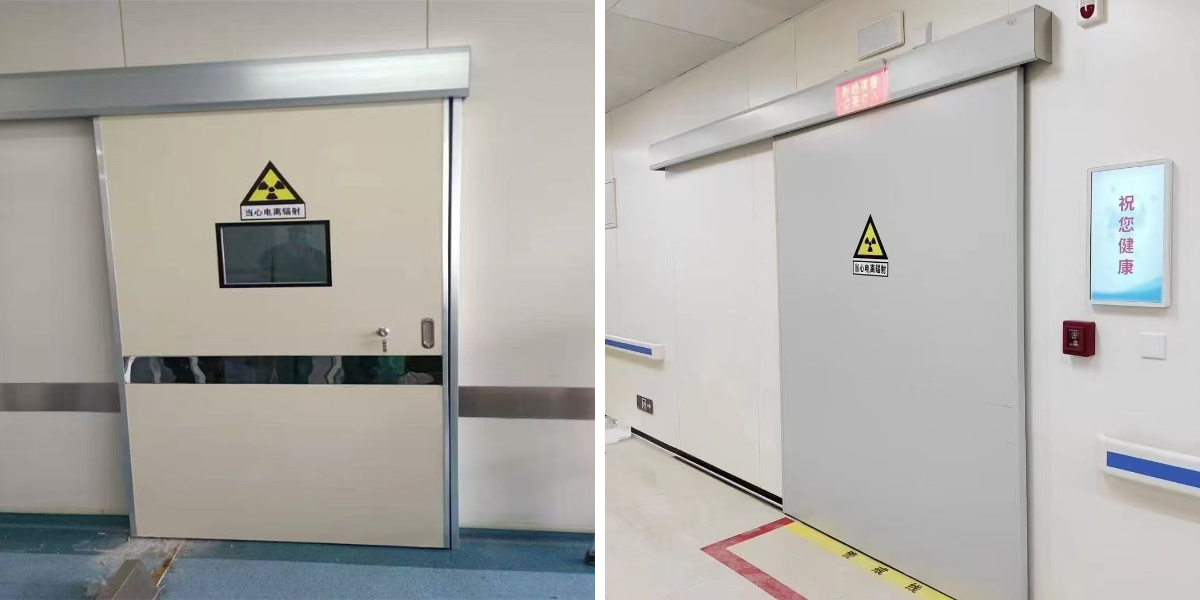
X-ray lead doors are an essential component of the controlled area of the clinic. They work in conjunction with lead-lined walls and lead-glass windows to form a complete shielding layer. The specifications of lead doors must be precise enough to provide adequate protection while also being practical for the daily workflow of a busy dental clinic, as lead doors are frequently opened and closed.
1. What is Lead Equivalent?
Shielding capability is measured in millimeter lead equivalent (mmPb). It indicates the ability of a lead door to attenuate radiation to the equivalent of a certain thickness of solid lead.
Typical requirements for dental clinics: Most commonly used dental X-ray equipment (intraoral X-ray machines, panoramic X-ray machines) require lead-lined doors with a shielding value of 1.0 mm to 1.5 mm lead equivalent (Pb). For clinics using cone-beam computed tomography (CBCT) scanners, due to their higher operating voltage (kVp) and greater scattering, 1.5 mm or 2.0 mm lead equivalent (Pb) is typically required. Do not guess these values.
2. How to calculate the size of a dental clinic lead door?
Space is usually limited, so the physical dimensions and structure of the door are crucial.
Standard size: The commonly used single-leaf lead door for dental clinics is 36 inches wide (approximately 914 mm) and 84 inches high (approximately 2134 mm). This size facilitates patient and equipment access.
Weight considerations: Depending on the size and core material structure, a 1.5 mm lead equivalent door can weigh 200-350 pounds (90-160 kg). Such significant weight requirements necessitate:
Use heavy-duty hardware: Ordinary household hinges cannot withstand the load. Continuous (piano-style) hinges or at least three heavy-duty hinges must be used, along with a suitable door closer or automatic door opener.
Structural support: The door frame and surrounding walls must be reinforced to withstand the weight over many years of use.
Workflow design: Consider using a door with a large lead-glass observation window. This allows for observation of the patient from the outside without opening the door, improving safety. The choice of lead acrylic or glass must match the lead equivalent specified on the door. Furthermore, choose either an inward-opening or outward-opening design based on the room layout and safety regulations.
3. Lead doors only function optimally when properly installed.
Professional installation is crucial: Due to the weight and precision requirements of the door, installation must be performed by experienced technicians, typically provided by the lead door manufacturer. They ensure the door is vertical, level, and operates smoothly.
The critical role of sealing: Radiation can leak from gaps. High-quality lead-lined doors should be equipped with perimeter radiation seals, and ideally, also an automatic pull-down bottom seal. These sealing strips compress when the door is closed, forming a continuous shielding barrier that blocks the most common pathways of radiation leakage.
Shandong Qite specializes in the production of lead doors and provides one-stop service for radiation protection materials. For more information on lead doors, please contact us.