Exploring Radiation-Proof Lead Doors: Guardians of Safety in Radiative Environments
With the rapid advancement of technology, radiation technologies have been widely applied in various fields such as medicine and industry, contributing greatly to human progress. However, radiation is invisible and intangible, posing potential health risks. In such environments, radiation-proof lead doors serve as loyal guardians, silently protecting people from harm.
Radiation-proof lead doors are primarily made of lead alloy. Lead, with its high atomic number and density, has excellent absorption capability for X-rays and gamma rays. When radiation encounters a lead door, it's like hitting a solid shield—hard to penetrate—thus being absorbed or scattered. In addition to lead plates, the door structure often incorporates stainless steel or galvanized steel sheets, ensuring not only effective protection but also durability and aesthetic appeal.
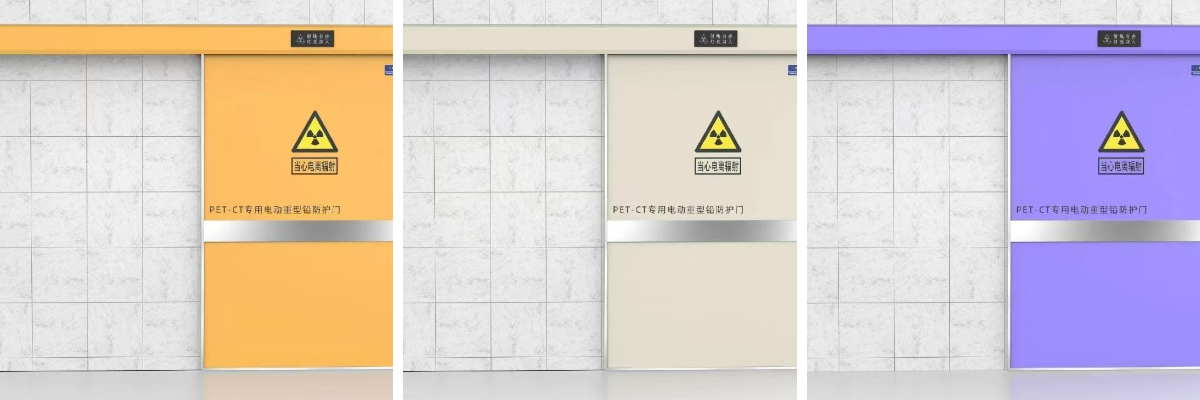
In hospital radiology departments, where CT scans and X-rays are performed daily on numerous patients, strong radiation is generated by the equipment. Radiation-proof lead doors serve as the first line of defense, effectively blocking harmful radiation and ensuring the safety of medical staff and patients. In the field of industrial flaw detection, lead doors are equally indispensable, safeguarding workers operating in radiation-prone environments.
Lead doors come in various types to suit different application scenarios and requirements. Swing-type lead doors are the most common, available in manual or electric operation, suitable for spacious areas. Sliding lead doors save space, ideal for areas with limited room. Automatic sensor lead doors offer convenient and hands-free operation, especially useful when manual access is inconvenient.
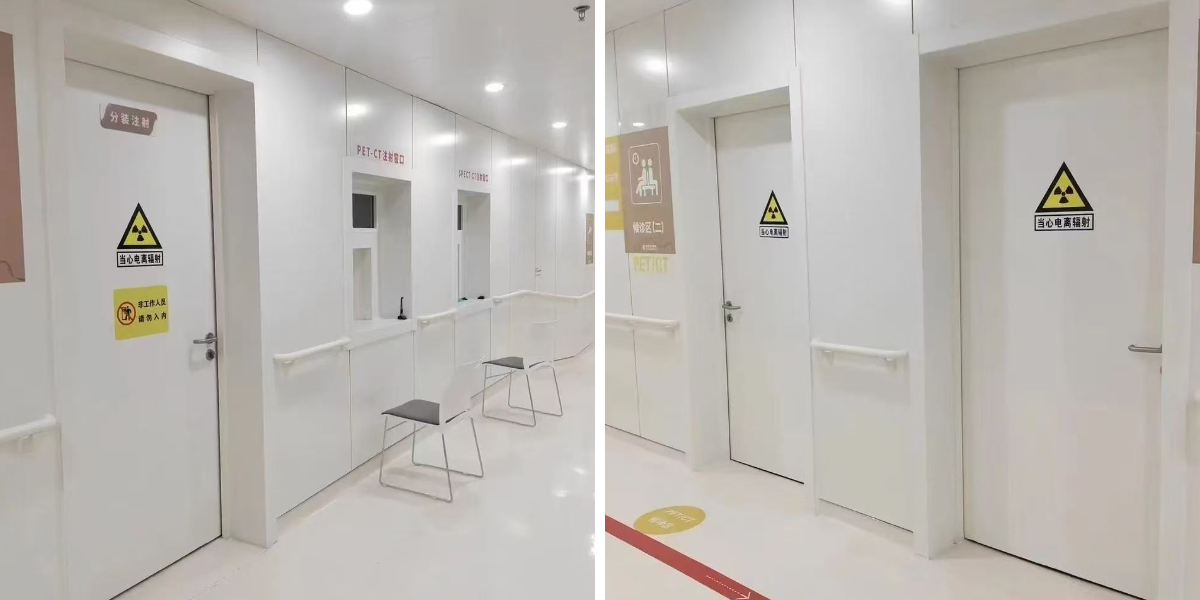
To ensure safety and reliability, lead doors are often equipped with auxiliary systems such as safety locks, access control systems, and infrared safety sensors. Regular inspections and maintenance are essential, and operators must receive professional training to avoid improper use, such as impact damage.
As technology continues to evolve, lead doors are also undergoing innovation. In the future, we can expect more lightweight, intelligent, and environmentally friendly lead doors, ushering in a new era of radiation protection. These advancements will allow us to enjoy the benefits of radiation technology while being better protected.